
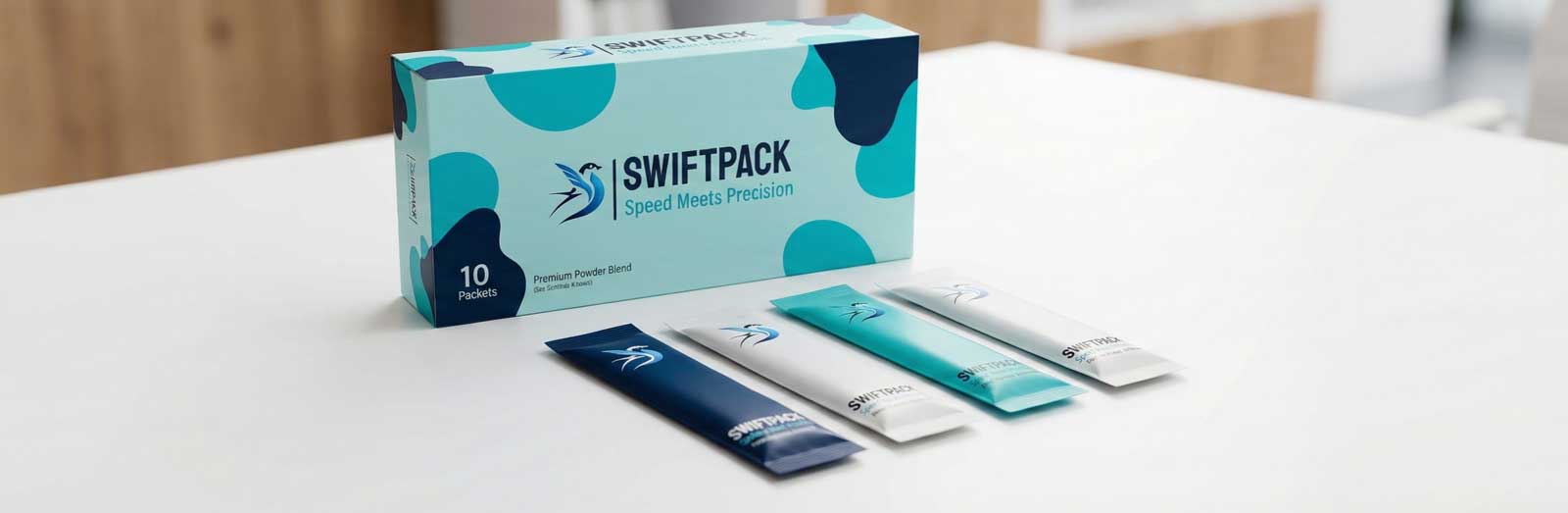

Imagine you’re in a grocery store, racing through the aisles. Your eyes scan a shelf, and one product makes you stop in your tracks. What just happened? You’ve been caught by a master of Packaging Design Services. It’s not magic—it’s a powerful blend of art, science, and psychology that can make or break a product.
In today’s world, where thousands of products compete for attention, packaging design is your silent, 24/7 salesperson. It’s the first thing a customer touches, the last thing they see before making a decision, and the thing they live with after the purchase. For any brand, from a hopeful startup to an established name, investing in expert Packaging Design Services isn’t a luxury; it’s a critical business strategy for survival and success.
Whether you’re a budding entrepreneur in Toronto or a health brand in Vancouver, the principles remain the same: your package must tell your story, protect your product, and connect with people on an emotional level. And with the right partner, this journey can be faster and more rewarding than you think. Let’s dive into the captivating world of packaging design and discover how the right packaging design services can unlock your brand’s true potential.
The Secret Life of Packaging: More Than Just a Pretty Wrapper
We often think of packaging as just a container, but it’s actually performing a high-wire act with multiple, demanding roles.
- The Silent Salesperson: Before a customer reads a word, the package has already communicated. Color, shape, and imagery create an instant impression. Studies show that shoppers make a subconscious judgment about a product within the first 90 seconds, and up to 90% of that assessment is based on color and design alone. Your package has to work fast!
- The Trusted Bodyguard: At its core, a package must protect. This is where science and engineering come in. The right materials and structure shield your product from moisture, light, air, and physical damage during its journey from a facility like Swift Pack‘s state-of-the-art plant in Ontario to the consumer’s home. A beautiful package that fails here is a recipe for disaster and unhappy customers.
- The Storyteller: Great packaging whispers your brand’s values. Is your coffee sustainably sourced? Your tea organic? Your snack locally made? The design—through materials, fonts, and imagery—can convey these messages without a long paragraph of text. For industries like Nutraceuticals & Dietary Supplements or Health & Beauty, conveying trust, purity, and efficacy through design is absolutely non-negotiable.
- The User’s Best Friend: Ever struggled to open a bag of chips or a bottle of pills? Frustrating, right? Good design prioritizes the user experience (UX). An easy-open tear strip, a resealable zipper for Snack Foods, or a child-resistant yet senior-friendly cap are all examples of design thinking that adds immense value and fosters brand loyalty.
From Sketch to Shelf: Inside the Packaging Design Process
So, how does a concept become a real, tangible package on a shelf? Partnering with a full-service provider like Swift Pack means you get to navigate this journey with experts who handle both the creative and the physical production. Here’s a simplified look at the stages:
- Discovery & Strategy: It all starts with a conversation. Who are you? Who is your customer? What’s your unique story? Designers dive deep into your brand’s heart, your competitors’ strategies, and your target market’s desires. This phase sets the strategic foundation for everything that follows.
- Concept & Creation: This is where ideas take visual form. Designers create mood boards, sketch concepts, and develop several distinct visual directions. They’ll explore logos, typography, color palettes, and imagery that align with your brand strategy. For a company like Swift Pack, which serves everything from Coffee & Tea to Food & Beverage, this step is tailored to the specific visual language of each industry.
- Refinement & Prototyping: You choose a direction, and the designers refine it. Today, we can go beyond 2D sketches. Using 3D modeling software, designers can create photorealistic mockups of your product on a virtual shelf. Even better, partners who offer rapid film printing can produce physical prototypes or short runs. This allows you to feel the package, test the usability, and see how it looks under real light before committing to a massive production order.
- Technical Design & Production Ready Art: Once the look is locked in, technical designers take over. They create precise, print-ready files with all the correct dielines (the template for cutting and folding), bleeds, and color specifications (like CMYK or Pantone spots). This meticulous step ensures what’s on screen becomes exactly what rolls off the printing press.
- Production & Co-Packing: This is where design meets reality. A true end-to-end partner doesn’t just hand you a digital file. They manage the transition to production, whether it’s printing custom films (in as little as 10-15 business days at Swift Pack) or actually filling the packages with your product through their contract co-packing services. This seamless integration eliminates delays and ensures the final product matches the designer’s vision perfectly.
The Power of Perception: What the Latest Science Tells Us
The field of packaging is constantly evolving, driven by consumer psychology and cutting-edge research. Here are some of the most impactful findings:
- The Haptic Connection: A study from the Journal of Consumer Psychology found that the texture of packaging directly influences perceptions of the product’s quality. A smoother, heavier, or more substantial-feeling package can make people believe the product inside is more luxurious or effective. This is crucial for premium categories like beauty products or specialty foods.
- Sustainability as a Default: It’s no longer just a trend; it’s a consumer expectation. A 2023 report by Trivium Packaging revealed that 82% of consumers aged 44 and under are willing to pay more for sustainable packaging. Furthermore, designs that use less material, incorporate post-consumer recycled content, or are clearly recyclable or compostable create a powerful positive brand association. Swift Pack‘s expertise in material science and flexible solutions helps brands navigate this shift effectively.
- Clarity Over Clutter: In the age of information overload, simplicity wins. Research consistently shows that clean, uncluttered designs with clear, legible typography and honest imagery build trust faster than busy, cluttered packages that scream for attention. The brain processes simplicity more easily, leading to faster recognition and a stronger brand recall.
- The Digital-Physical Blend: With the rise of QR codes and AR (Augmented Reality), the package is becoming an interactive gateway. Scanning a code on your snack bag could lead to a recipe video, or pointing your phone at a supplement bottle could show a 3D animation of its benefits. This “phygital” experience deepens engagement and provides valuable content long after the purchase.
Finding Your Perfect Packaging Partner: What to Look For
Choosing who to trust with your brand’s face to the world is a big decision. Here are the key traits of a standout packaging partner:
- End-to-End Expertise: Look for a partner that bridges the gap between creative design and physical production. A firm that only designs might create a gorgeous package that is impossible to produce efficiently or cost-effectively. A partner like Swift Pack, with 30 years of collective experience in both packaging machine manufacturing and contract co-packing, ensures the design is not only beautiful but also manufacturable and functional.
- Agility and Speed: In today’s fast-paced market, speed is a superpower. The ability to get custom films in 10-15 business days and offer small batch runs allows brands to test markets, launch products faster, and iterate based on real customer feedback without being locked into massive, costly inventories.
- Industry-Specific Knowledge: Packaging for supplements isn’t the same as packaging for coffee or cosmetics. The best partners have proven experience across your specific vertical, understanding its unique regulatory requirements, retail environments, and consumer expectations.
- A Partnership Mentality: Your packaging partner should feel like an extension of your team. Look for proactive communication, guidance, and a genuine investment in your success. The process should be collaborative, transparent, and built on trust.
Your Package, Your Legacy
From the moment of first glance on a crowded shelf to the satisfying click of a resealable closure in a customer’s kitchen, packaging design is an intimate dialogue between your brand and the world. It’s a powerful tool that builds recognition, drives sales, communicates values, and, when done right, creates a loyal community of fans.
The journey from a great idea to a great package on the shelf doesn’t have to be daunting. By partnering with experts who combine visionary Packaging Design Services with deep manufacturing and co-packing knowledge, you gain a powerful ally. You gain a team that understands every step of the process, eliminates friction, and empowers you to bring your brand’s best face forward with confidence and speed.
At Swift Pack, we live at this intersection of creative design and practical production. Backed by three decades of expertise, we are built to help brands of all sizes—from ambitious startups to established leaders—win on the shelf and in the hearts of consumers. We invite you to see how our unique, integrated approach can transform your packaging from a simple container into your most valuable business asset.
Ready to begin your packaging transformation? Visit us at swiftpack.ca to start a conversation with our team today.
References
- Crilly, N., Moultrie, J., & Clarkson, P. J. (2004). Seeing things: consumer response to the visual domain in product design. Design Studies.
https://www.sciencedirect.com/science/article/abs/pii/S0142694X04000323 - Singh, S. (2006). Impact of color on marketing. Management Decision.
https://www.emerald.com/insight/content/doi/10.1108/00251740610673332/full/html - Krishna, A., & Morrin, M. (2008). Does touch affect taste? The perceptual transfer of product container haptic cues. Journal of Consumer Research.
https://academic.oup.com/jcr/article-abstract/34/6/807/1793492 - Trivium Packaging. (2023). Buyer Behavior Report: The Growing Demand for Sustainable Packaging.
https://www.triviumpackaging.com/sustainability/buyer-behavior-report - Orth, U. R., & Malkewitz, K. (2008). Holistic package design and consumer brand impressions. Journal of Marketing.
https://journals.sagepub.com/doi/abs/10.1509/jmkg.72.3.64 - Journal of Consumer Psychology. (Various studies on sensory marketing and packaging).
https://www.journals.elsevier.com/journal-of-consumer-psychology - Smarta. (2022). The Role of Packaging in Consumer Buying Behavior.
https://www.smarta.com/blog/the-role-of-packaging-in-consumer-buying-behavior/ - Institute of Packaging Professionals (IoPP). Fundamentals of Packaging Technology.
https://www.iopp.org/page/fundamentals - Food Marketing Institute (FMI). U.S. Grocery Shopper Trends.
https://www.fmi.org/our-research/research-reports/u-s-grocery-shopper-trends - Harvard Business Review. (2019). The New Science of Sensory Marketing.
https://hbr.org/2019/11/the-new-science-of-sensory-marketing